


Crab Orchard Golf Club

Rating Snapshot


About
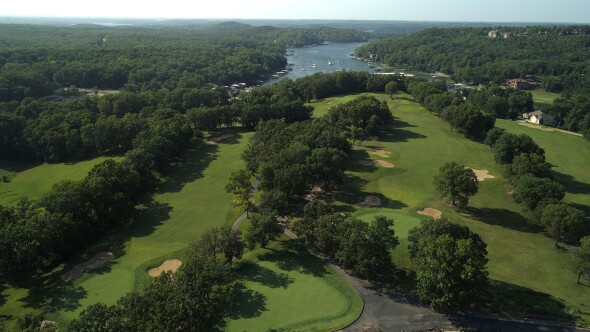
Crab Orchard Golf Club originally opened in 1959, but in order to keep up with modern courses, it has seen many beneficial changes over the years. Though the design of the layout has fluctuated, Crab Orchard is known among locals for consistently offering superb conditions. The scenic golf course features lush fairways winding through stands of mature oak trees. Water hazards come into play on half of the holes and the small greens have subtle breaks, which can make them difficult to read. The golf course is quite formidable from the championship tees but the forward and middle tees make it approachable for all skill levels. In addition to the course, a popular feature at Crab Orchard is the large driving range which boasts target greens and a practice bunker.
| Tee | Par | Length | Rating | Slope |
|---|---|---|---|---|
| Black | 70 | 6420 yards | 71.0 | 129 |
| Blue | 70 | 6136 yards | 69.0 | 121 |
| White | 70 | 5844 yards | 68.2 | 114 |
| Gold | 70 | 5264 yards | ||
| Red (W) | 71 | 5058 yards | 68.2 | 109 |
| Hole | 1 | 2 | 3 | 4 | 5 | 6 | 7 | 8 | 9 | Out | 10 | 11 | 12 | 13 | 14 | 15 | 16 | 17 | 18 | In | Total |
|---|---|---|---|---|---|---|---|---|---|---|---|---|---|---|---|---|---|---|---|---|---|
| Black M: 70.5/123 | 360 | 394 | 401 | 175 | 526 | 400 | 203 | 401 | 505 | 3365 | 202 | 363 | 340 | 390 | 435 | 414 | 218 | 313 | 380 | 3055 | 6420 |
| Blue M: 68.7/124 W: 75.4/128 | 335 | 387 | 388 | 168 | 515 | 385 | 186 | 354 | 495 | 3213 | 192 | 353 | 334 | 380 | 425 | 404 | 173 | 305 | 357 | 2923 | 6136 |
| White M: 67.8/119 W: 73.1/125 | 325 | 352 | 373 | 145 | 494 | 385 | 178 | 321 | 479 | 3052 | 184 | 342 | 327 | 357 | 416 | 381 | 150 | 303 | 330 | 2790 | 5842 |
| Gold M: 65.3/113 W: 70.1/119 | 315 | 332 | 342 | 130 | 460 | 352 | 127 | 312 | 381 | 2751 | 173 | 300 | 320 | 302 | 395 | 315 | 125 | 292 | 291 | 2513 | 5264 |
| Red W: 68.1/116 | 290 | 312 | 287 | 116 | 446 | 347 | 117 | 291 | 371 | 2577 | 160 | 288 | 312 | 296 | 388 | 308 | 102 | 285 | 281 | 2420 | 4997 |
| Handicap | 13 | 11 | 5 | 17 | 1 | 3 | 15 | 7 | 9 | 10 | 14 | 4 | 8 | 2 | 6 | 18 | 12 | 16 | |||
| Par | 4 | 4 | 4 | 3 | 5 | 4 | 3 | 4 | 5 | 36 | 3 | 4 | 4 | 4 | 4 | 4 | 3 | 4 | 4 | 34 | 70 |
| Handicap (W) | 5 | 13 | 11 | 15 | 1 | 7 | 17 | 3 | 9 | 12 | 16 | 6 | 8 | 2 | 10 | 18 | 4 | 14 |
Course Details
Rentals/Services
Practice/Instruction
Policies
Available Facilities
Clubhouse, Meeting FacilitiesReviews

Mixed review at Crab Orchard
The two 9's were completely different...the front was fairly straight were the back had several severe dog legs, two of which were 90 degrees. Beware if playing for the first time on the back. The greens were receptive to an approach shot but difficult to chip to without fringes around the greens and of course the rough was healthy and thick. The fairways were a little high, great for setting the ball up for an iron shot but not much roll out with a drive. The green side bunkers were littered with grass growing in it.
My biggest complaint was cart fees for $20/person. I was able to address this with the GolfNow staff but rarely experience cart fees that expensive unless playing at a exclusive, nice resort.
The water feature between 9 and 18 was very pretty.
Good value.
Good fairways. Slow greens. Bunkers in terrible shape. Some creative holes. Great pace. Very friendly staff and good value. Would play again.
Great round of Golf
Had a great time walking this 18 hole course. Tee boxes, fairways and greens in excellent shape. Staff was friendly and helpful. Shame this course is up for sale. Hope they don't cut it up and sell it for individuals looking to build houses. Hope I get to play this course for years to come.
Nice course, friendly staff
Enjoyed our day! Comfortable course with some challenging holes. Staff was extremely accommodating. My wife lost a head cover and they called the next day to say they found it and would mail it to our house. Wow!

A little windy.
A little wet but we had a good time. It was just nice to play a good course this early.
Challenging round
The course was more challenging that I expected and it was a fun course.
Great experience
Awesome course and friendly staff. Will definitely play again!
Great Value on very good course.
GolfNow check in process worked awesome for a great value on a round of golf at a very good golf course.
Not bad for the price
I've played this course for years. While it's still in fairly descent shape it's not what it once was. The greens have always been great and the fairways are usually beautiful as well , they seemed to be a little sparse but still pretty good. The staff hasn't ever been the best but you learn to deal with that , pay your money and go play. All in all if your playing the hot deal for $13.00 plus $3.00 booking fee $16.00 is a heck of a deal but I wouldn't pay much more to play it when you can play Hickory Ridge for $25.50 tax title license , Hickory is second to none in southern Illinois. If you haven't played there you owe it to yourself. If your tired of playing flat , str8 holes. Go play Hickory
Great Course
Nice 18 home course. Driving range is a plus. Friendly staff and cold beverages!!!
Really like the layout of this course. The fairways were in really good shape. You could tell that time and effort had been put into this course getting it ready for spring play!


The Best of The Lake Package
Ozarks Golf Around Package
