


 TOP PICK
St. Andrews Golf & Country Club - St. Andrews Course

Rating Snapshot


About
Opened in 1926, in the "Classical ERA" of U.S. course development, St. Andrews Golf & Country Club has been recognized as the oldest family owned-operated golf course in Illinois.
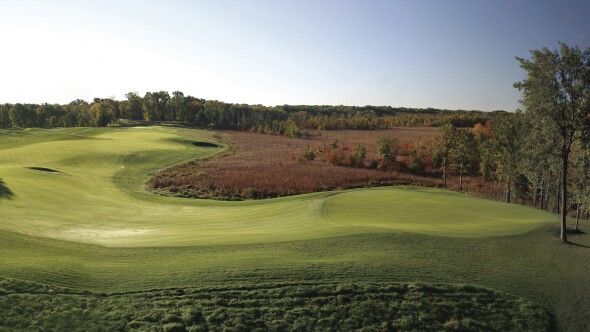
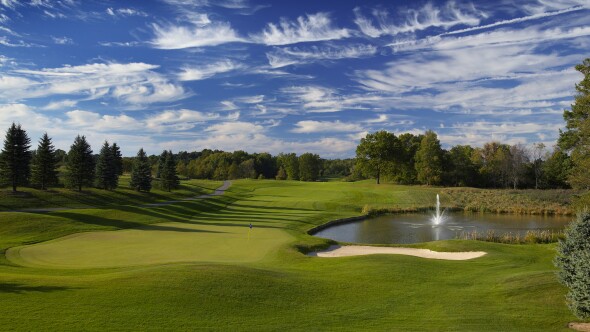
St. Andrews Golf & Country Club was originally built in 1926 as a rival to the Chicago Golf Club. Since then, the club has built its own reputation and stands out for its two championship golf courses and top-ranked practice center. The St. Andrews Course is the club's original layout before the Joe Jemsek Course was added in 1929. It is also the longer of the two golf courses. The club and course draw their name from the famous Scottish club known as the "home of golf," but the course is far from being a seaside links. Instead, the mostly flat layout weaves through mature trees. The golf course offers a challenge with tight, tree-lined doglegs and large, contoured greens framed with sand bunkers. It has a memorable finish with a par 4 that features a water hazard along the entire right side of the fairway.
| Tee | Par | Length | Rating | Slope |
|---|---|---|---|---|
| Blue | 71 | 6920 yards | 72.5 | 128 |
| White | 71 | 6418 yards | 70.2 | 123 |
| White (W) | 71 | 6418 yards | 76.0 | 133 |
| Gold | 71 | 5607 yards | 66.5 | 114 |
| Gold (W) | 71 | 5607 yards | 71.5 | 123 |
| Red (W) | 71 | 5011 yards | 68.5 | 117 |
| Red | 71 | 5011 yards | 64.0 | 108 |
| Hole | 1 | 2 | 3 | 4 | 5 | 6 | 7 | 8 | 9 | Out | 10 | 11 | 12 | 13 | 14 | 15 | 16 | 17 | 18 | In | Total |
|---|---|---|---|---|---|---|---|---|---|---|---|---|---|---|---|---|---|---|---|---|---|
| Blue M: 72.5/128 | 351 | 448 | 182 | 428 | 402 | 447 | 194 | 485 | 411 | 3348 | 500 | 454 | 237 | 407 | 531 | 173 | 445 | 418 | 404 | 3569 | 6917 |
| White M: 70.2/123 | 334 | 437 | 158 | 368 | 348 | 394 | 181 | 459 | 383 | 3062 | 483 | 427 | 212 | 374 | 501 | 165 | 425 | 403 | 366 | 3356 | 6418 |
| Gold M: 66.5/114 W: 71.5/123 | 300 | 370 | 149 | 294 | 325 | 308 | 175 | 435 | 365 | 2721 | 460 | 367 | 175 | 320 | 460 | 142 | 331 | 330 | 301 | 2886 | 5607 |
| Red M: 64.0/108 W: 68.5/117 | 251 | 320 | 140 | 286 | 302 | 296 | 155 | 387 | 306 | 2443 | 409 | 334 | 165 | 281 | 388 | 129 | 306 | 275 | 281 | 2568 | 5011 |
| Handicap | 13 | 1 | 17 | 9 | 11 | 5 | 15 | 3 | 7 | 6 | 2 | 16 | 14 | 4 | 18 | 8 | 10 | 12 | |||
| Par | 4 | 4 | 3 | 4 | 4 | 4 | 3 | 5 | 4 | 35 | 5 | 4 | 3 | 4 | 5 | 3 | 4 | 4 | 4 | 36 | 71 |
| Handicap (W) | 13 | 1 | 17 | 9 | 5 | 11 | 15 | 3 | 7 | 4 | 6 | 16 | 12 | 2 | 18 | 8 | 14 | 10 |
Course Details
Rentals/Services
Practice/Instruction
Policies
Food & Beverage
Bar, RestaurantAvailable Facilities
Clubhouse, Conference Facilities, Banquet FacilitiesReviews
Reviewer Photos
-
Photo submitted by u2984043 on 02/12/2024
-
Photo submitted by u000006504576 on 07/19/2021
-
Photo submitted by u000006504576 on 07/19/2021
-
Photo submitted by u000006504576 on 07/19/2021
-
Photo submitted by u000006504576 on 07/19/2021
-
Photo submitted by u540526797 on 07/16/2020
-
Photo submitted by u540526797 on 07/16/2020
-
Photo submitted by u000007374475 on 12/18/2019
-
Photo submitted by joninski on 08/26/2013
-
Photo submitted by tpaj on 06/30/2013
-
Photo submitted by tpaj on 06/30/2013

Great course for the money
Course was in great shape for the beginning of March. The greens were a little long but expected for the time of year, but were in great shape. Staff extremely friendly and entire course was playable.
Challenging for all levels
Narrow fairways rewards better players but little OB opportunity provides forgiveness for beginners. Great walking course as well
Good course - too slow
Took us 5 hours to play 15 holes. We decided to just walk in.
$9 for a small reange ball bucket seems a bit extreme.

Awesome Winter Golf
I’m really not a fan of golf below 50 degrees. That noted, this was the best day of winter golf in Chicagoland ever! A little snow on the fairways and greens but that made it interesting. And nothing better that snow bunkers! It’s like the playing out of really soft sand. Anyway, I walked 18 in 2hrs 30mins. Love that pace and had a really good scorecard. It was a really great day!
Great value
This course plays well for all skills. Unfortunately there isn’t much of a difference from blue tees to white. Was a windy and cold day so tough to gauge distances. Wish they had more clear markers on sprinkler heads with exact yards to center of green but there were stakes in the ground in the rough with 100-150-200-250 markers. Love this course and will play more often! Also staff was super friendly and let me know of the replay option. Ask the pro shop staff for details.
Amazing condition for February!
As always, great experience with the staff and a great value.
Great place to play!
The course has rolling hills, large sand traps and a good lay out!. The price is reasonable and the staff are very friendly.
Great Fall Golf
Course was pretty empty except for us diehards that want to get in one more round
Course is in good shape for Fall Golf, staff is friendly
Highly recommend!
larry6336, thank you for your kind words! We hope to see you again at the course very soon for another 5-star experience. Thanks for choosing St. Andrews Golf & Country Club - St. Andrews Course.






SentryWorld Stay & Play Package
Destination Kohler - Champions' Trail Golf Package
Destination Kohler - To Dye Four Golf Package
SW Michigan Golf Around Package

Thank you for your positive review! We appreciate your kind words and hope to see you again soon.