


 TOP PICK


Rating Snapshot


About
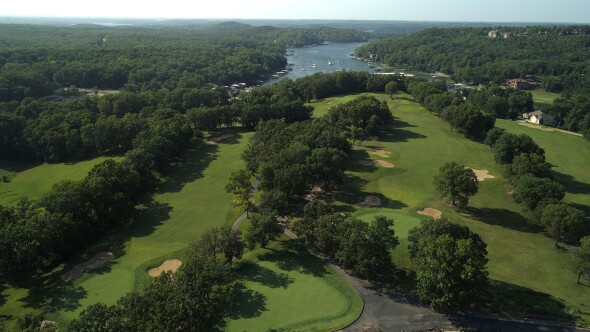
Annbriar Golf Course in Waterloo is one of the top 10 golf courses in Illinois. The course was built on rolling farmland covered with native wild grasses. The layout eases you into the challenges with a links-style front nine that is less demanding than the back nine. The fairways are invitingly wide but if you miss them, you'll be faced with thick fescue. The back nine takes advantage of the surprisingly undulating terrain, which is unexpected since just across the river the land is almost totally flat. Annbriar's signature hole, the par-4 11th, was voted the best hole in the St. Louis area. From an elevated tee, golfers enjoy a stunning view as they play down into a valley. This hole is also the no. 1 handicap hole on Annbriar Golf Course.
| Tee | Par | Length | Rating | Slope |
|---|---|---|---|---|
| Yellow | 72 | 6863 yards | 72.8 | 136 |
| Blue | 72 | 6517 yards | 70.9 | 129 |
| White | 72 | 5946 yards | 68.1 | 123 |
| Green | 72 | 5446 yards | 64.1 | 112 |
| Green (W) | 72 | 5446 yards | 70.6 | 118 |
| Red (W) | 72 | 4792 yards | 66.4 | 110 |
| Hole | 1 | 2 | 3 | 4 | 5 | 6 | 7 | 8 | 9 | Out | 10 | 11 | 12 | 13 | 14 | 15 | 16 | 17 | 18 | In | Total |
|---|---|---|---|---|---|---|---|---|---|---|---|---|---|---|---|---|---|---|---|---|---|
| Yellow M: 73.1/135 | 361 | 435 | 385 | 193 | 535 | 388 | 165 | 426 | 495 | 3383 | 408 | 398 | 368 | 383 | 506 | 172 | 466 | 173 | 603 | 3477 | 6860 |
| Blue M: 71.5/131 | 337 | 395 | 373 | 190 | 496 | 378 | 155 | 415 | 475 | 3214 | 382 | 404 | 353 | 356 | 492 | 151 | 446 | 147 | 572 | 3303 | 6517 |
| Oak M: 70.1/129 | 304 | 364 | 373 | 174 | 489 | 349 | 138 | 400 | 475 | 3066 | 361 | 404 | 321 | 356 | 467 | 133 | 446 | 132 | 572 | 3192 | 6258 |
| White M: 68.5/124 W: 74.1/131 | 304 | 364 | 343 | 174 | 489 | 349 | 138 | 400 | 427 | 2988 | 361 | 352 | 321 | 309 | 467 | 133 | 388 | 132 | 495 | 2958 | 5946 |
| Sycamore M: 67.4/120 W: 72.9/129 | 304 | 364 | 343 | 174 | 463 | 349 | 138 | 354 | 427 | 2916 | 361 | 352 | 321 | 309 | 424 | 133 | 314 | 132 | 473 | 2819 | 5735 |
| Green M: 66.1/114 W: 71.3/125 | 281 | 340 | 310 | 155 | 463 | 313 | 118 | 354 | 401 | 2735 | 342 | 328 | 299 | 283 | 424 | 126 | 314 | 122 | 473 | 2711 | 5446 |
| Maple W: 69.1/122 | 281 | 289 | 275 | 116 | 463 | 287 | 118 | 283 | 401 | 2513 | 310 | 266 | 299 | 283 | 424 | 126 | 292 | 122 | 452 | 2574 | 5087 |
| Red W: 67.2/116 | 225 | 289 | 275 | 116 | 434 | 287 | 75 | 283 | 384 | 2368 | 310 | 271 | 258 | 238 | 368 | 109 | 292 | 102 | 452 | 2400 | 4768 |
| Orange W: 64.9/108 | 225 | 289 | 209 | 116 | 334 | 237 | 75 | 283 | 339 | 2107 | 266 | 271 | 258 | 238 | 368 | 109 | 242 | 102 | 377 | 2231 | 4338 |
| Handicap | 16 | 10 | 14 | 6 | 2 | 8 | 18 | 4 | 12 | 13 | 5 | 15 | 7 | 9 | 11 | 1 | 17 | 3 | |||
| Par | 4 | 4 | 4 | 3 | 5 | 4 | 3 | 4 | 5 | 36 | 4 | 4 | 4 | 4 | 5 | 3 | 4 | 3 | 5 | 36 | 72 |
Course Details
Rentals/Services
Practice/Instruction
Policies
Food & Beverage
Bar, Snacks, RestaurantAvailable Facilities
Clubhouse, Meeting Facilities, Banquet FacilitiesAccolades
Reviews
Reviewer Photos
-
Photo submitted by u409841644 on 01/18/2024
-
Photo submitted by u314160329146 on 10/23/2023
-
Photo submitted by u314160329146 on 10/23/2023
-
Photo submitted by Cerberusson on 10/14/2023
-
Photo submitted by Cerberusson on 10/14/2023
-
Photo submitted by mooaemusick on 09/07/2023
-
Photo submitted by ReadyOrScott123 on 11/01/2022
-
Hole 13 With Tree Limbs Trimmed Photo submitted by lcbgolf on 05/12/2022
-
Photo submitted by Icanhackit on 08/07/2021
-
Photo submitted by lcbgolf on 07/19/2021
-
Relaxing in the clubhouse with family and friends Photo submitted by u000003796489 on 07/11/2021
-
Photo submitted by dlovekamp on 07/21/2020
-
Photo submitted by u000006174881 on 01/21/2020
-
Photo submitted by stlbej on 10/20/2019
-
Photo submitted by jkbeger41golf on 10/04/2019
-
Photo submitted by Sandoman on 07/06/2019
-
Photo submitted by Sandoman on 07/06/2019
-
#14 Par 5 Photo submitted by Terry5188025 on 07/16/2017
-
Photo submitted by photokrohn on 10/24/2013
-
Photo submitted by photokrohn on 10/24/2013

Wow
The Marshall at a local course recommended this place. He was right!! This course is one of the nicest I’ve ever played, and very reasonable green fees. Must play track if you are in the area.
The Best Course In The St. Louis Metro Area
It is always a treat to play Annbriar. Everyone is friendly and you feel so welcome here. The coures has wonderful design and is always in good shape.
They have renovated the restrooms that were getting outdated. The new renovations look great.
Get out and play Annbriar. You won't be disappointed.
Best course on Southern IL.Great
Great course, club house, restaurant, experience. Everybody from the proshop, to the starter, to the restaurant/ bar make you feel welcome. Well be back soon.

Great Course, Great Rate
Annbrair is the best course in the metro St. Louis area. With a senior rate in the low 40's - you can beat this. The course has great design and playable for all handicaps.
We have had a warm February-March and the dormant zoysia grass has a tint of green to it already.
They will probably aerate the greens after the Women's Missouri Valley Conference Golf Championships, which are being head at Annbrair for the second straight year. April 14-16, 2024.
Best in STL
Phenomenal course, well kept, with beautiful terrain, woods, and surroundings. Challenging course with a great mix and style hole-to-hole.
Pretty sloppy conditions following overnight thunderstorms.
Not the course’s fault at all but the fairways were very, very wet after overnight storms. Made play pretty messy. Also, there was no on course Marshall and we got stuck behind a very slow foursome and twosome. We waited on most tees and there was no one behind us. Our round took almost 5 hours and lost of the time my partner and I play in 3 1/2 or less.
Fun with friends.
A big boys' course that is still fun and enjoyable to play...looking forward to the next time.
Awesome course
Challenging but a fun course.
Staff is great. Course is in great shape for early spring.
Always Enjoyable
Annbriar has become one of my favorite courses in the STL area.


The Best of The Lake Package
Ozarks Golf Around Package

Robert Trent Jones Golf Trail – The Shoals Stay & Play Package
 Perks
Perks
-
 Merchandise Discount20% Off Soft Goods
 -
 Free Range Balls2 for 1 Range Balls
 -
 Exclusive Tee Time (Availability or Discounts)Complimentary Green Fee Replay


